
I had already decided on the title of this blog post before I even realized that it is the title of one of Thich Nhat Hanh’s books, which surprisingly I have not yet read. I am a big fan of Thich Nhat Hanh quotes, but I have yet to read any of his books. Alas, this blog post is going to be based mainly on my own experiences and what I have learned as a teacher and facilitator of social and emotional learning.
To simplify the act of communicating, you need a sender and a receiver. To complicate this act, let’s first focus on the sender. We can share our thoughts and our feelings in a variety of ways. The most obvious one is verbally, using spoken words or sounds and language. We can take that same idea, and use both words and language but share them in written form as well. Another way is through signs and symbols, such as sign language or even art. Body language can also convey messages and is a form of communication without using any words at all. I also believe in energies and that we can form a connection with another based on the vibes that are being sent our way and that can create a feeling so powerful that it is also a form of communication.
It is said that the receiver has the more important of the two jobs and despite the many forms of communication, I will refer to the receiver here as the listener. To be an active listener requires many things: the ability to fully pay attention without thinking about anything else (especially a response), the ability to understand the words that are being used, the ability to capture the context and emotions from where the words are coming from and the ability to not make assumptions.
There are so many things that can go wrong between the transfer of thoughts and feelings, no matter the form of communication being used. We all bring our own experiences, our own biases, our own perspectives and beliefs into everything that we do and it is truly an art to be able to put those to the side when communicating whether you are in the role or sender or receiver, or both if it is a true conversation.
Understanding. If there is no understanding, no true comprehension of what is being shared among the sender and receiver, then there is no communication. That’s the science part of communication.
So what do you do? The good news is that communication is a skill. Some of us are more inclined and natural senders and some of us who don’t feel as comfortable sending learn how to become very good listeners more naturally, as a result of that. Despite one’s natural inclination and personality, it is imperative that we acquire the skills to be both. Our success in life: relationships of every kind, depends on it.
For those who are more natural senders:
- Be aware of the space you are taking up.
- Be aware of what you are putting out into the world, is it necessary for it to be shared or is it something that you can let sit within yourself to resonate or solve on your own?
- Be aware of the language you use. Are you being impeccable with your word?
- Ask yourself how you want to be heard and apply that when it is your turn to listen.
- Take a deep breath (or many) to clear your mind before listening to someone else.
- Develop your listening skills by practicing. Take opportunities throughout the day, even with random people. Initiate by asking questions and don’t feel as though you need to respond or share your thoughts and feelings on each topic. Challenge yourself to not respond.
For those who are more natural listeners:
- Don’t be afraid to take up space.
- Work on developing your language skills and build up your vocabulary so that you can accurately share yourself with confidence.
- Find a medium or platform where you feel comfortable sharing yourself: art, music, writing, etc. and keep building yourself up.
- Take a deep breath (or many) to clear your mind before sharing.
- Develop your speaking skills by practicing. Take opportunities throughout the day and find people whom you are comfortable with, to begin. Initiate if you must, but don’t accept one word answers from yourself. Your story is worthy and you have important things to say. Slowly build your confidence to talk to others outside of your comfort zone.
- Be brave enough to be vulnerable. No one is perfect and you will make mistakes.
Parents and teachers of young children you are at an advantage! This is the perfect time to instill these skills into the littles. They are so incredibly smart and pick up so quickly on interactions with you and with others. You can help create an environment where both speaking and listening, aka effective communication will become natural for them!
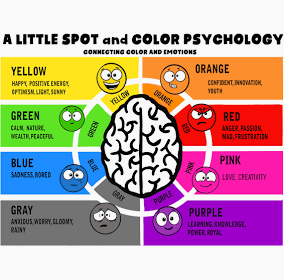
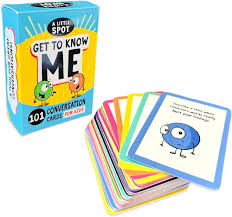
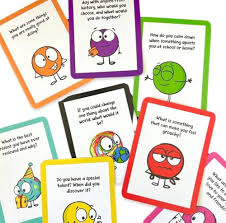
I am a huge fan of Diane Alber and her A Little Spot Series. I recently purchased a box of “Get to Know Me” conversation cards. Not only do these cards allow children (and adults) to practice their (speaking and listening) communication skills, but they ask deeper questions. They are even color coded based on how the question might make you feel. It is a skill to learn how to talk and express our frustrations and anger in a positive way, just as it is to express our gratitude and joys! Not only that, you will be exposing your child or students to questions that they may have never been asked or thought about. You will be giving them a chance to learn more about themselves as well!
Communication fosters connection and at the end of the day, isn’t that what it is all about?
 amomentsglory.com
Leave a comment